FIGHT THE FREEZE
GEAR UP FOR WINTER
SKI & SNOW HYDRATION PACKS


FIGHT THE FREEZE

Sometimes you just want the freedom to ride a line without racing the clock. Mark Weir, Marco Osborne and Matt Koen spend a weekend taping and riding fresh trails on a 1,000-acre ranch in NorCal.
The massive wildfires in CamelBak’s backyard are laying waste to Northern California, our thoughts are with all those affected. CamelBak is using their event equipment and volunteering in the community to ensure evacuee’s have fresh water.
Stay safe!

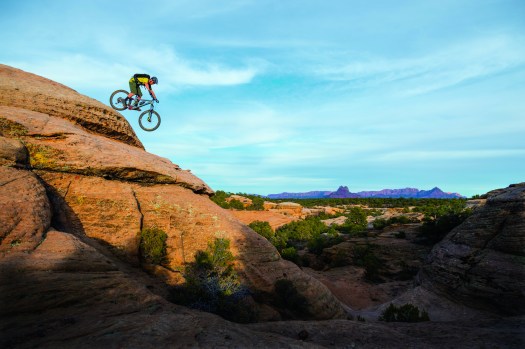
Take a mental vacation with us back to happier times in the California with filmmaker Zach Youngberg and mountain biker Dane Petersen. Zach brings us some fast-paced footage of a day in the life of Dane Petersen. Follow Dane as he hits a variety of trails through the Sierra foothills.
Filmmaker Zach Youngberg and MTB pro, Dane Petersen have been shooting and riding together for the past four years. Dane picks the zones that he deems perfect for filming, and Zach follows with a camera in tow. “Dane is super talented on a bike, which makes my job that much easier.” says Zach. They both have busy schedules, but they manage to collaborate once a year to create a compelling video that riders will get excited to watch. Videos always take place on a new trail and in a new area, which keeps things that much more interesting.
After you watch the CamelBak video “Ride, Sleep, Repeat” below, be sure to check out Soil Searching for a taste of how Dane can rip it up on all types of terrain.
Zach tells us, “I’ve been able to see Dane’s riding progress leaps and bounds through my lens. When I was in middle school, Dane was the free rider in our community, and I always saw photos of him throwing x-ups and no handers over big booters that he built. Fast forward to today and here I am working with him. It’s pretty cool to see how much things have changed. I’ve never been too talented on a bike, but I really enjoy the sport as a whole and filming it is my way of tying into the community.”

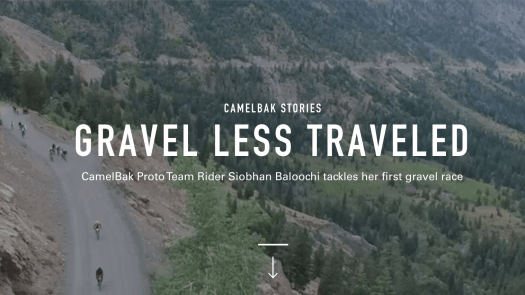
Everyone remembers their first race. It makes a vivid impact on each rider’s relationship to the sport for years to come. Whether you bonked hard, crashed out, crushed it, or just surprised yourself with a solid performance, an endurance race will undoubtedly test your mental resolve and physical stamina.
Siobhan Baloochi has been in the saddle for years, but has yet to take on the challenge of a long distance gravel race. Rebecca’s Private Idaho, in the sagebrush strewn high country of Idaho proved to be quite the challenge.
Hosted by its namesake, CamelBak Athlete Rebecca Rusch, Rebecca’s Private Idaho offers a unique gravel riding experience, chocked full of events, activities and camaraderie. Get a taste for it here and follow Siobhan as she faces challenges yet pedals on with grit and determination. We present to you, Gravel Less Traveled.

The following is a sneak peek at the 2018 Bike offering from CamelBak for 2018.
From MTBR by Saris Mercanti
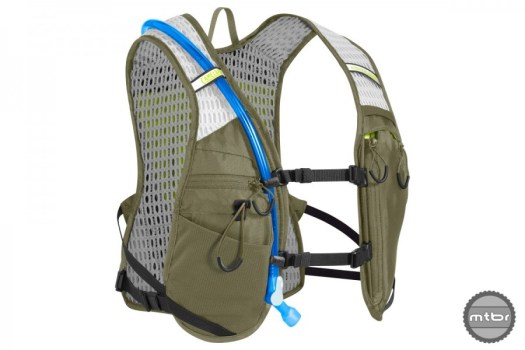
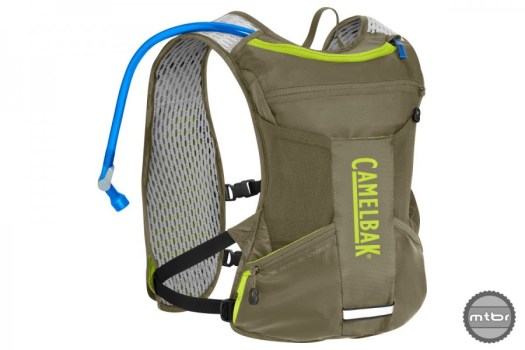
At first glance, the CamelBak Chase bike vest looks like something that belongs on the back of an ultra-runner. It’s kind of dorky — until you put it on. Then, in my opinion, it becomes the most comfortable hydration pack you’ve ever worn.

It’s designed for maximum stability, so the front and rear loads are balanced. Unlike the running versions, this mountain bike specific pack uses tougher materials, more zippers, and larger storage pockets. As an added advantage, it’s short enough so you can still access your jersey pockets. Price is $100.

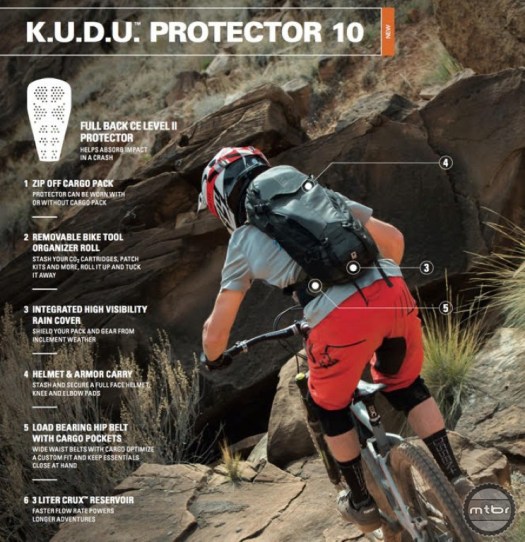
For 2018, CamelBak has completely redesigned the K.U.D.U. The new pack sells for less, while adding a number of new features. The removable tool roll, integrated rain cover, helmet/armor straps, and side pockets all carry over. Items such as the belt, sternum straps, and back protection have all been redesigned.

The new back protector meets the stringent CE2 motorcycle safety standard and is designed to be more flexible. This allows it to better conform to your back, making it more comfortable on long rides. The pad also receives additional perforation for improved airflow.

Perhaps the coolest feature is that the back protector can work without the cargo pack. If you want to go light weight, the entire back zips off to reveal a stand-alone back protector with jersey style pockets. The pack is available as either a 10L or 20L. Price is $200 and $230 respectively.

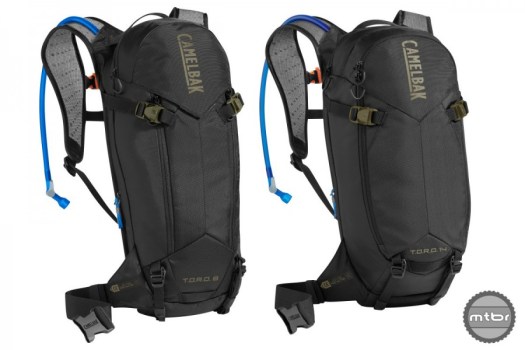
Don’t want to drop two bills on a CE certified backpack you’ll only wear at the bike park or when required at races? CamelBak’s new T.O.R.O. features a CE2 certified back protector, but ditches some of the bells and whistles found on the K.U.D.U.

If you can live without the rain cover, zip off design, and removable tool roll, you can pick up the T.O.R.O. 8L for $160 or the T.O.R.O. 14L for $180.

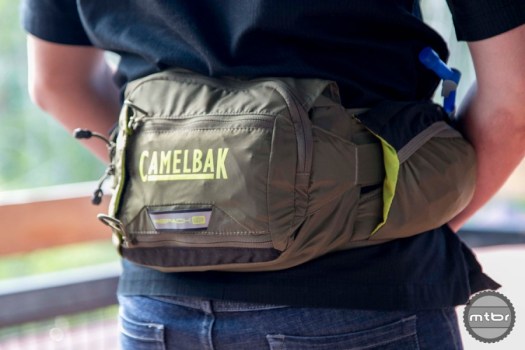
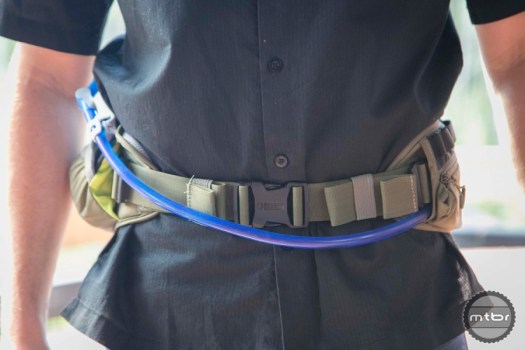
If hydration packs aren’t your thing, then the new Repack might be more your style. Based loosely on the Palos waist pack, this new bum bag resolves many of the complaints Mtbr had with the previous design. Read MTBR’s review of the Palos here.

The key is the new compression system, which should keep the bag from flopping around. CamelBak also reconfigured the pockets, so the new pack is sleeker. It will still tote a 1.5-liter reservoir, plus 2.5L of gear (or 4L of stuff and no reservoir). Price is $75.

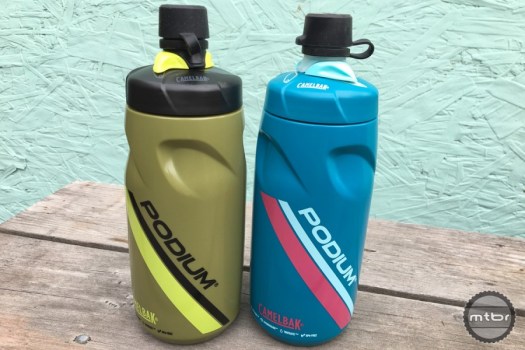
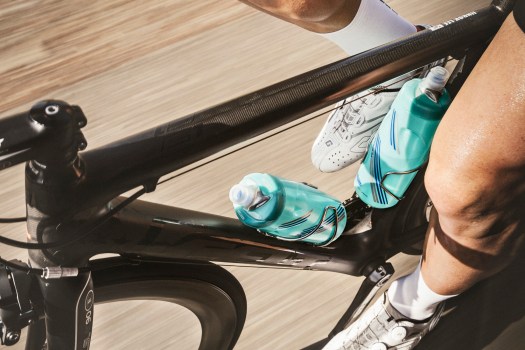
When you’re headed on a shorter ride, sometimes you don’t need to carry a pack. A water bottle on your frame and some basic tools are enough. The only downside with a water bottle is that the nozzle can get covered in gunk. Enter the new Dirt Series. It’s basically the bottle and bite valve we’ve come to love, but with a silicone dust cap. The water bottle is also a touch shorter, so it’s less likely to rub on your shock.
The Dirt Series is available in standard and insulated versions. Both hold 21 oz. Retail is $11 and $15. That’s a $2 up charge over the standard Podium, which does not come with a dust cap.

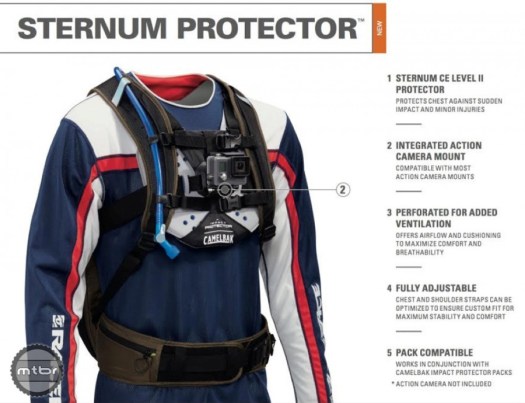
On a non-hydration related note, CamelBak was showcasing a new Sternum Protector with an integrated GoPro mount. This CEII level protector is made from the same material as the back protector in the K.U.D.O. and T.O.R.O. series and is cut to work in conjunction with a backpack. The Sternum Protector is available in one size (28-47” or 71-116 cm). Retail will be $100.

How Riders Hydrate For The Tour de FranceThe annual pilgrimage through the roads of France for the world’s best cyclists is unquestionably one of the most demanding sporting events in the world. More than three weeks of grueling racing through every imaginable weather, terrain and challenge places physiological and emotional stress beyond what most of us mortals can begin to imagine. Beyond being highly trained for the demands of the racing, the sport also requires massive thought and focus on several other supporting components of performance, including equipment, recovery, fueling, nutrition and hydration. None of these components will make a champion, but if ignored they can certainly destroy dreams and opportunities for a champion. Today, I will focus on hydration, with a focus on why it is important and how, if executed correctly, can facilitate optimal performance and recovery.
The Importance of Hydration in Endurance Events:
Let’s first consider the role of proper hydration in endurance events. Most of us have some grasp on the fact that proper hydration is preferable over dehydration, but do you know what proper hydration will accomplish? Well, a few of the positives of proper hydration are:
If we can keep an athlete hydrated they can stay focused, delay fatigue, recover well and have the potential to maximize their fitness and performance readiness.
The Tour Puzzle:
In an event such as the Tour de France, which challenges athletes to compete at their peak day after day, we are interested in elevated daily performance and prevention of a negative physiological and nutritional status. The athletes must do all that is possible to support the physical riding with enough calories during and between the competition hours, minimizing dehydration during the riding, and restore hydration status each day. If they can achieve these areas they will limit any additional assaults on their immune system through accidental “athletic starvation,” or highly dehydrated states. Both of which are highly corrosive to the immune system and athletic performance.
You can almost think about the best performers being the riders who suffer and slow down the least relative to their competition, or another way to look at it is damage limitation. Hydration is a key part of this damage limitation strategy.
The Sciency Bit. How Does It Work?
You will likely know that water is key to cellular function and life, but let’s consider how it helps endurance performance. It is key to realize that you cannot remain fully hydrated on any single day of an event such as this. Every athlete will get dehydrated throughout the course of a day riding at the Tour.
The key is to get less dehydrated.
The reason for this focuses mainly around the volume of blood in our body. To simplify the role of blood in our body we should consider two primary roles of our blood in endurance exercise:
When riders begin the Tour, in their fully hydrated state, their blood volume is optimal, so there is ‘plenty to go around’ and the muscles receive plenty of oxygen and generated heat is easily dissipated. As the race continues the rider will become more and more dehydrated, and as the blood is made up of plenty of water, our blood volume begins to drop. As the blood volume drops, coupled with increasing heat production as the work rate continues, the competition for blood increases. In this battle the skin will always win as increasing heat can be life-threatening, but how fast you ride has little consequence to your brain and vital organs. This means more of your ‘lowered blood volume’ will get pushed to the skin, leaving less for the muscle consequently generating an early onset of fatigue. Not a good thing for elite athletes, hence it is easy to understand why hydration status should be preserved as much as possible.
But this isn’t all! In addition to maintaining hydration status the athlete must also continue to fuel with calories, and hydration has an important role in this process also.
When you sit at your dining room table and have a meal your absorption of ingested calories in highly efficient, and unless you gorge yourself or eat too quickly, you shouldn’t experience too much gastrointestinal distress. When you are exercising hard, or racing your bike through the mountains of France, the same cannot be said. Much of the blood normally used to facilitate absorption is being rushed to the muscles or skin, hence absorption is severely limited, yet the athletes still require calories to fuel the work. To achieve this, athletes need to ‘micro-dose’ caloric ingestion with small, yet frequent, feedings. To maximize absorption these calories need to be diluted down to around 4 to 6 % solution of calories relative to hydration. We get our athletes to think of their hydration as the transporter of calories, and the shuttle that will keep them not only hydrated, but well-fueled.
Recovery:
Of course, once the days’ racing is over, they have to step up and do it again the next day. The game now shifts to maximizing recovery and restoring hydration status. This is absolutely key to success, and all riders will make a habit, or ritual of rehydration following the day of racing. It takes many hours to properly rehydrate following a day of racing, so frequently drinking fluids throughout the afternoon and evening is critical. If the rider does a good job of rehydrating they will maximize muscular recovery, restore status back to ‘normal’ (as close to it as possible) for the next day, and open up the opportunity for a good night sleep.
The key message is that, in events such as the Tour de France, the daily racing is already a massive stress. The key for the riders is to do all they can to minimize the negative effects of that stress, as well as prevent adding any additional suppression of their immune system and health through a lack of follow through on a completely controllable factor such as hydration.
You might not be racing in The Tour this July, but the same concept absolutely applies. Life is already stressful enough; don’t add additional stress to your life by going through it in a dehydrated state! Find your performance and support your life through optimal hydration. Your body will thank you and reward you with your optimal daily performance potential.
By: MATT DIXON
The founder and CEO of purplepatch fitness, Matt is an exercise physiologist, elite-level coach and former professional triathlete who sees hydration as a critical part of the nutrition equation.

The following is from thewirecutter.com
After more than 50 hours researching and testing hydration packs, including hiking with them, torturing their components, and downing enough water to almost risk hyponatremia (yes, it’s possible to drink too much water), we’ve come up with our favorite hydration daypacks for moderate hikes…
The best men’s pack for all-day hikes: This large but comfortable daypack easily holds its 3-liter reservoir and all the gear you’ll need for an ambitious outing.
This pack easily lives up to its name; it’s plenty big and rugged enough for an all-day assault on one of Colorado’s famed 14,000-foot peaks. For men looking to carry multiple extra clothing layers, lunch, camera, and other odds and ends—in addition to plenty of water—the CamelBak Fourteener 24 hit the sweet spot in terms of capacity, useful features, and comfort. The pack’s 3-liter reservoir is one of the largest you can buy, and it’s easy to use. Our testers especially liked this pack’s semi-rigid back panel suspension system, which handled heavy loads with ease.

Great for travelers: Small enough to stuff into a suitcase, this pack contains a 1.5-liter reservoir, perfect for staying hydrated during days of sightseeing and light hiking.
For people who want a basic, lightweight hydration pack—one that’s affordable as well as perfect for traveling—we recommend the CamelBak Arête 18. Constructed with relatively thin nylon and minimal padding, this pack easily folds up to tuck into your luggage, yet it’s comfortable when carrying modest loads. Its 1.5-liter reservoir holds just enough water for a pleasant afternoon sightseeing in a foreign city or strolling along an easy trail.
Blood Road follows the journey of ultra-endurance mountain bike athlete Rebecca Rusch and her Vietnamese riding partner, Huyen Nguyen, as they pedal 1,200 miles along the infamous Ho Chi Minh Trail through the dense jungles of Vietnam, Laos, and Cambodia. Their goal: to reach the crash site and final resting place of Rebecca’s father, a U.S. Air Force pilot shot down over Laos some 40 years earlier.
During this poignant voyage of self discovery, the women push their bodies to the limit while learning more about the historic ‘Blood Road’ they’re pedaling and how the Vietnam War shaped their lives in different ways.
Available June 20
For more info check out bloodroadfilm.com
The following is a review from BikeRadar.com

BikeRadar score: ⭐️⭐️⭐️⭐️⭐️ 5/5
BikeRadar verdict:
“The MULE LR is supremely comfortable, uses a top-notch reservoir and makes organizing any amount of gear easy”
Highs: 100oz low-ride reservoir, very comfortable, pockets everywhere, detachable hose, bite valve lock, useful gear storage
Lows: Not much; upper strap buckles are hard to close, still warm on the back
Buy if: Your riding needs demand loads of gear and plenty of water and you want one of the best hydration packs on the market
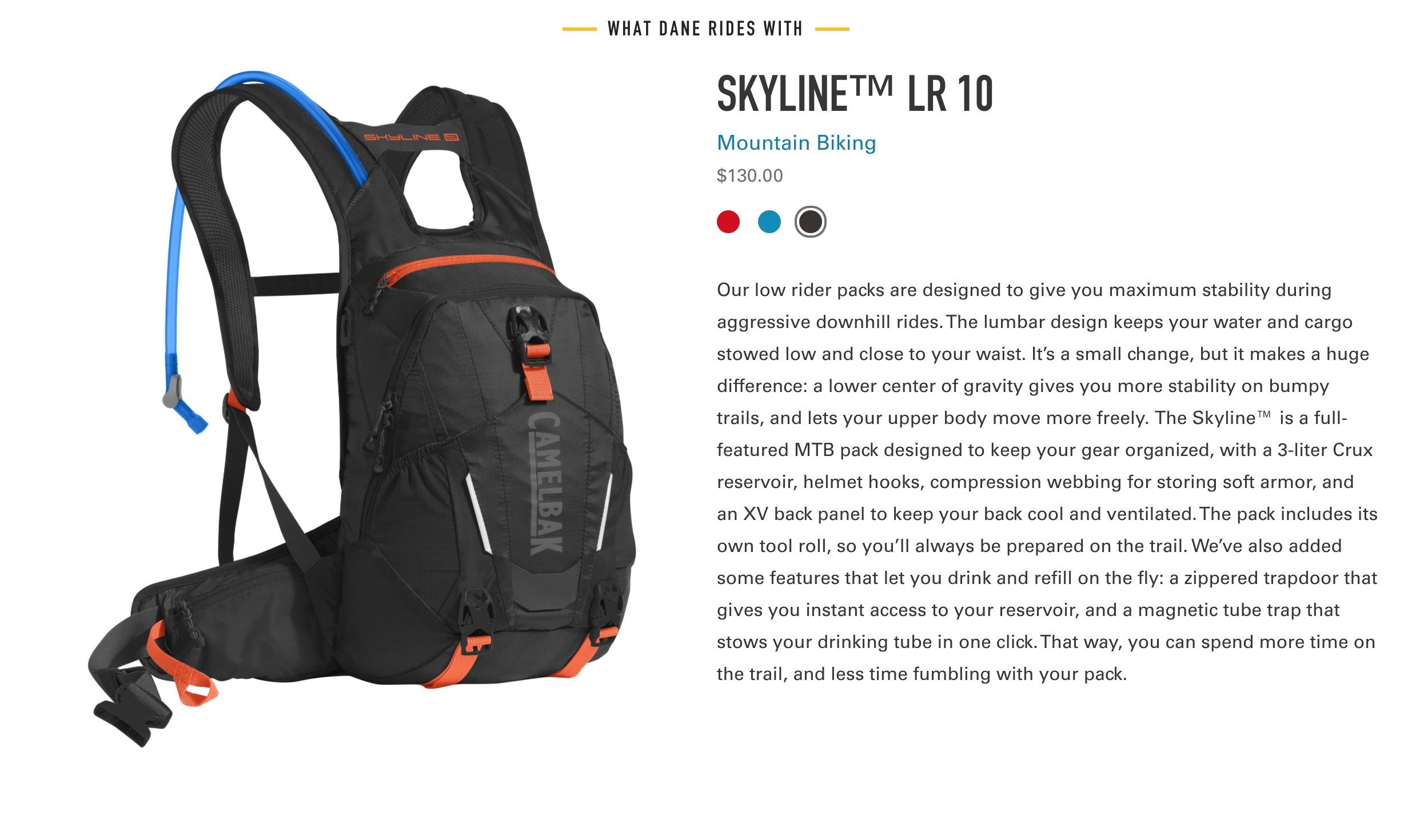
Back in the early 2000s, I spent a lot of time riding with a core group of 10-12 guys who rode hard, explored every valley and mountainside, and spent huge days on their bikes. While each individual varied with their set ups and riding style, there was one constant throughout the crew, we all had CamelBak HAWG hydration packs. It gained our trust through thousands of hours of riding, bushwhacking and hanging out in the forest — and CamelBak’s current MULE LR 15 pack reminds me of those legendary HAWG packs.
It is however lighter, more streamlined, easier to wear and better in every way. I’ve been abusing this one for close to a year now and while not as pretty as when new, it shows no signs of giving up.

If you have a hydration pack you’re probably keenly aware of the log-on-your-back feeling that most packs filled with water have. For years the standard shape of a reservoir was a tall rectangle, which put the liquid’s weight vertically on your back.
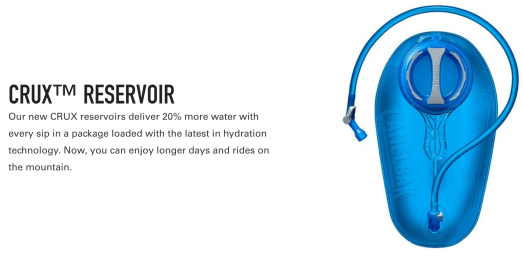
CamelBak’s Crux lumber reservoir does away with that. It’s aptly named simply because having the weight up high can be a deal breaker for some riders. The Crux reservoir lowers the center of gravity to around your hips, which makes every type of riding better in my opinion.

Continue reading “Bike Radar – CamelBak MULE LR 15 Hydration Pack Review”
From the CO-OP Journal
By Matt & Agnes Hage

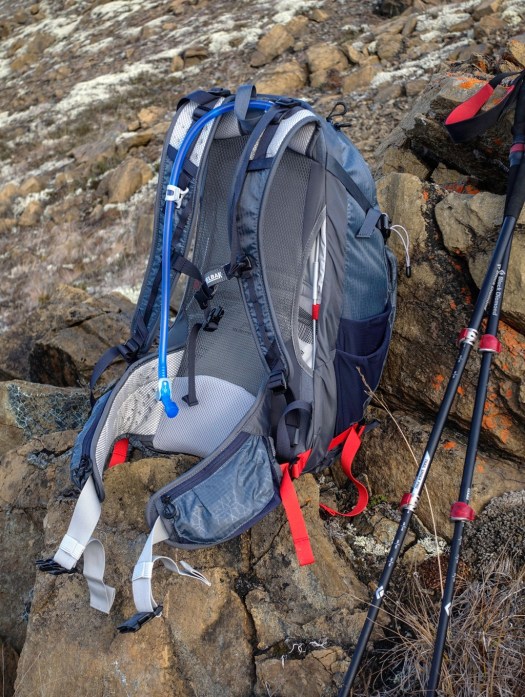
As I pulled CamelBak’s new hydration daypack out of the box, my first impression was “Wow, this thing is hefty.” The Franconia LR 24 is both a daypack and a hydration pack, but it’s the Cadillac of those categories. It’s full of features found on most big backpacking rigs, such as load lifters on the shoulder straps, a generous hipbelt with expandable pockets, and compression straps to bring the load closer into your back. And, it has a metal frame. All of these give it the ability to comfortably carry a good-sized load, and with over 20 liters of capacity, that’s a real option.

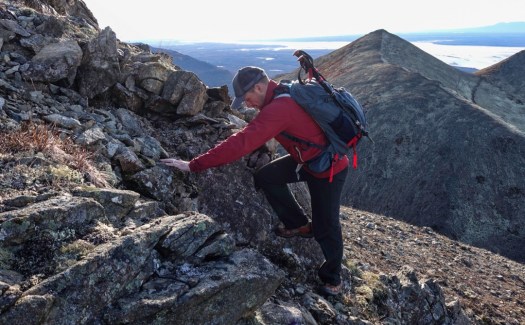
In addition to what I normally carry for a day hike in the mountains (snacks, layers, jacket, water), I was able to put a DSLR camera with a couple lenses in the pack body along with a couple cans of beer to fill it out properly. There still was room for a sandwich and an apple. With the three-liter water reservoir filled to capacity, my daypack weighed about 28 pounds—all of which would cut straight into my shoulders with a classic “bag with two straps” kind of pack. But trying on the Franconia, fully loaded for a posh day hike, I could feel how the solidly built frame worked with the load lifters, hipbelt and compression straps to provide a smooth carry. This proved to be the case on a couple peak-bagging missions in the mountains near our home in Anchorage, Alaska.

Scrambling up craggy ridgelines, I appreciated how the pack is designed to pull the weight into my back. The side compression straps for the internal reservoir pocket securely put those three liters squarely up against the lumbar area of the back instead of higher up in-between my shoulder blades.
The pack’s air suspension back panel was also one of my favorite features, since hiking a good-sized load up a couple thousand feet of mountain can be sweaty work. Even though I did break a sweat, the back of my shirt didn’t get the soaked feel you can get with limited-airflow back panels. Lastly, the hipbelt tightened easily and both cargo pockets were easy to access while tight on your hips.

CamelBak’s latest incarnation of their signature hydration reservoir, the Crux LR, is topnotch. I’ve shied away from CamelBak hydration systems after years of wonky screw-on lids that often went on half-cocked only to leak two liters of water into my pack. Those days seem to be behind us now: Filling and tightening the new Crux LR is easy and secure.
The Franconia is more like a mini full-featured backpack than a daypack or hydration pack. Because its empty weight of nearly three pounds would easily eclipse the payload, you wouldn’t want this for a trail run or if all you carry is a jacket and a couple energy bars. But its awesome carrying capacity does make it a good choice for day outings (bring a cooking system for hot drinks or dinner on top of some peak) as well as minimalist overnighters (we’ve done three days out of 25-liter packs).
You must be logged in to post a comment.